Grease Cleaning Pros In Acton provides swift, dependable solutions for commercial kitchens. We deliver fast grease trap pumping and professional grease cleaning. Acton restaurants trust our team for grease trap service, including interceptor cleaning, kitchen exhaust cleaning, and used cooking oil collection.
Visit website of Grease Cleaning Pros in Acton

See details about Grease Cleaning Pros in Agua Dulce

Find out more about Grease Cleaning Pros in Altadena
Prompt service helps protect your investment and supports compliance with local regulations. Regular grease trap pumping minimizes emergency repairs, enhances kitchen safety, and reduces odors and pest risks associated with DIY disposal.
We customize schedules around your needs—weekly, biweekly, monthly, or quarterly—while considering fryer volume and Acton requirements. Each service includes documentation for inspections and efficient Acton grease removal. This lets your staff spend less time on waste management.
Turn to Grease Cleaning Pros In Acton for fast, reliable grease trap service trusted by Acton businesses. Our professional grease cleaning supports hygiene, safety, and environmental responsibility through oil recycling.
Why Regular Grease Trap Pumping Matters For Acton Restaurants
Managing a commercial kitchen requires more than getting food out quickly. It also means maintaining health scores, protecting plumbing, and supporting staff safety. Regular Grease Trap Pumping and proper maintenance in Acton help prevent disruptions. These small investments can save a lot in the long run.
The Real Costs Of Neglecting Grease Traps
Ignoring grease traps can lead to health department shutdowns and hefty fines, from $1,000 to $50,000. Restaurants can suffer immediate reputation damage when customers notice odors or backups.
Plumbing failures may damage costly equipment. Just one clog can cost thousands of dollars to repair. In contrast, routine cleaning costs only a few hundred dollars.
Ignoring grease traps attracts pests and increases insurance claims. The costs extend beyond repairs, creating business and legal issues such as slip-and-fall incidents.
How Proper Pumping Helps Reduce Emergency Repair Costs
Regular Grease Trap Pumping ensures grease and solids stay below 25% capacity, as many municipalities require. That reduces the risk of major clogs and emergency callouts.
Routine scheduled service helps minimize emergency grease repairs and kitchen downtime. It may also help lower insurance premiums and make inspections faster.
Professional crews perform detailed cleaning, including scraping baffles, pressure washing, inspecting pipes, and checking structures. They catch smaller problems before they turn into major repairs.
Signs Your Kitchen Needs Immediate Grease Service
- Slow drains or sinks that make gurgling sounds.
- Water pooling in three-compartment sinks or visible overflow.
- Rotten-egg hydrogen sulfide smells or grease appearing where it should not.
- Standing water near trap locations or increased pest activity.
If several drains are slow or grease is backing up into sinks or dishwashers, call for emergency grease repair. Check your service history: if more than 90 days have passed since the last visit or there is no paperwork, schedule cleaning immediately.
Grease Cleaning Pros Serving Acton
Local restaurants and facilities rely on a dedicated team for reliable grease management. Grease Cleaning Pros In Acton offers scheduled services that align with busy kitchen schedules. The team prioritizes safety, keeps kitchens ready for inspections, and maintains clear digital records for health departments.
Who We Are: An Overview Of Grease Cleaning Pros
Grease Cleaning Pros In Acton specializes in grease trap pumping and cleaning, interceptor maintenance, and kitchen exhaust system cleaning. They also manage rooftop grease containment and commercial equipment care. Their technicians are trained to manage toxic-gas risks, operate heavy equipment safely, and provide detailed digital documentation post-visit.
Their used cooking oil collection service offers sealed containers, scheduled pickups, and receipts that simplify recordkeeping. The recycled oil is sent to biodiesel producers and approved industrial partners.
Primary Services Offered
Grease trap pumping services include small indoor traps and large interceptors. They provide full removal, pressure washing, baffle scraping, and checks of inlet and outlet lines. Each service also includes refilling with clean water.
Their interceptor pumping work covers vaults sized from 500 to over 5,000 gallons. They use heavy pump trucks, remove covers, clean multiple compartments, and perform structural checks. Groundwater infiltration testing is also conducted.
Kitchen exhaust cleaning includes hood and duct cleaning, filter service, and fan hinge installation. Rooftop grease containment is also available. Commercial deep cleaning options include HVAC cleaning, floor and grout restoration, and customized service plans based on kitchen output. Digital reports are provided after each job for inspection and compliance needs.
What Makes Grease Cleaning Pros Different
Flexible scheduling is used to fit kitchen volume while reducing disruption during busy hours. The first pickups determine the right service rhythm without forcing clients into long-term contracts.
The team’s compliance-first mindset keeps them aligned with local and federal regulations. Electronic access to service records makes inspections and audits easier.
A strong environmental commitment is shown through their used cooking oil collection program. They prioritize recycling oil into biodiesel and other usable products. This practice can lower carbon impact and bolster a restaurant’s sustainability claims.
| Offered Service | Typical Range | Main Deliverable |
|---|---|---|
| Grease trap pumping | 5 to 500 gallons | Full pumping, pressure washing, baffle scraping, and refill |
| Interceptor pumping | 500–5,000+ gallons | Heavy truck pump, cover removal, structural checks |
| Kitchen exhaust cleaning Acton | Single-unit to multi-unit kitchens | Hood, duct, fan service; filter and hinge installation |
| Cooking oil collection in Acton | Small containers to bulk loads | Sealed collection, documentation, and recycling into biodiesel |
How Professional Grease Trap And Interceptor Service Works
Consistent maintenance is essential for smooth kitchen operation and clear plumbing. Understanding the process helps managers prepare for service days. This includes the professional grease cleaning process, the trap pumping timeline, and larger interceptor work.
The Cleaning And Pumping Process Step By Step
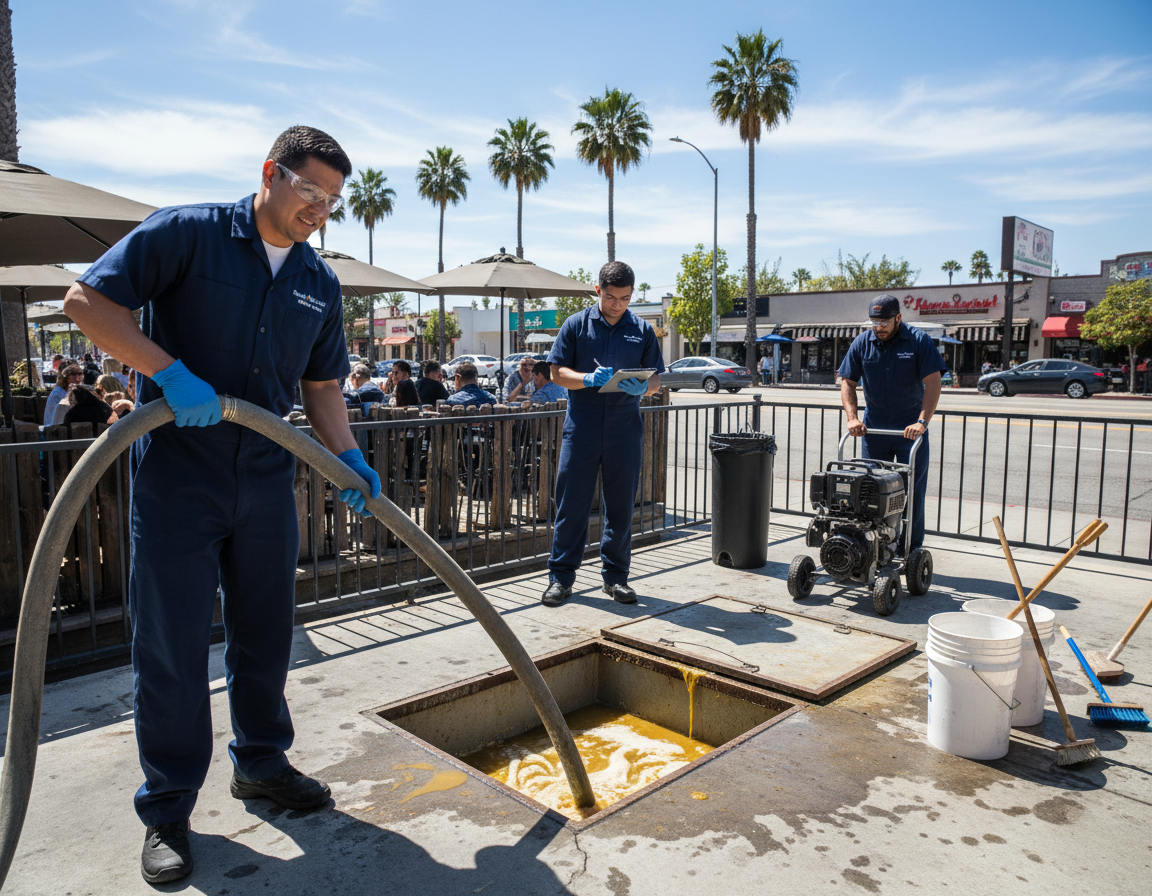
Technicians first locate the trap and gain access to it. They measure the grease layer thickness and record their findings. This documentation supports inspection records and customer receipts.
After that, vacuum-equipped pump trucks remove the floating grease layer, wastewater, and settled food solids. Technicians follow strict safety protocols due to the risk of toxic gases in confined spaces.
After the bulk waste is removed, crews scrape baffles and pressure wash the interior walls. They inspect the inlet and outlet pipes for clogs and structural concerns. The unit is then refilled with clean water to restore proper function.
Work concludes with final documentation and a detailed receipt. Your digital records include layer measurements, photos, and time-stamped service details for your files.
Difference Between Indoor Traps And Large Interceptors
Indoor traps are smaller units designed to serve one kitchen. Cleaning these units usually takes 30–90 minutes, depending on access and condition.
Large interceptors are concrete or fiberglass vaults with capacities ranging from 500 to 5,000+ gallons. These systems often serve whole buildings or multiple restaurants and require heavy equipment with direct pump truck access.
Interceptor cleaning involves removing heavy covers, cleaning multiple compartments, and conducting broader inspections for damage or groundwater infiltration. In Acton, interceptor cleaning jobs often take longer and call for more coordination.
The required service frequency varies. Many interceptors are serviced on a quarterly schedule. Sites with high volume may require monthly pump-outs to maintain compliance.
Service Day Timeframes And Expectations
Standard indoor trap cleaning usually falls within the 30 to 90 minute range. Larger interceptors can take several hours based on size and site access.
To avoid peak business hours, Grease Cleaning Pros coordinates service routes carefully. Technicians handle all lifting, disposal, and paperwork so staff involvement remains minimal.
The visit typically includes removal, cleaning, inspection, and refill work. The trap pumping timeline is shared before arrival and updated through routing systems to keep managers informed.
| Service Type | Average Duration | Primary Steps | Typical Frequency |
|---|---|---|---|
| Indoor grease trap service | 30–90 minutes | Unit access, grease measurement, vacuuming, scraping, pressure washing, refilling, and documentation | Monthly to quarterly depending on usage |
| 500–1,500 gal interceptor | 2 to 4 hours | Remove covers, pump compartments, inspect for damage, clean, document | Quarterly, or monthly for high-volume sites |
| Large Interceptor (1,500+ gal) | From several hours to a full day | Heavy-equipment access, multi-compartment cleaning, structural inspection, and detailed reporting | Quarterly or according to a site-specific schedule |
Acton Used Cooking Oil Collection And Recycling
A straightforward used cooking oil collection program can help restaurants and caterers in Acton simplify waste management. Grease Cleaning Pros offers sealed containers tailored to each kitchen, preventing spills and pest problems. Collection schedules are arranged around peak hours for quick and efficient service.
Following every pickup, customers get a detailed receipt listing the volume collected and the recycling method used. Inspection-ready digital records are maintained and remain available whenever needed. Long-term contracts are not required; an initial assessment sets the best pickup frequency, and adjustments can be made as needed.
The oil that is collected is processed by certified recycling facilities serving Acton. The oil is turned into biodiesel, animal feed supplements, and industrial lubricants. This process reduces carbon emissions compared to petroleum diesel and prevents waste from entering landfills and sewers.
Using cooking oil recycling in Acton strengthens a restaurant’s sustainability story and appeals to environmentally conscious customers. Documentation provided through Grease Cleaning Pros oil pickup helps during health department inspections and lowers the risk of fines for improper disposal.
Proper oil collection helps minimize plumbing blockages and costly grease trap pumping emergencies. Staff can spend more time on food preparation, which boosts productivity and service quality. Flexible scheduling ensures containers are not overwhelmed, aligning with your business’s rhythm.
| Service Feature | What Is Provided | Benefit |
|---|---|---|
| Supply of containers | Sealed bins sized to output | Helps prevent spills and pests |
| Collection schedule | Prearranged days and quick on-site service | Keeps staff disruption minimal |
| Records and documentation | Receipts plus digital records | Supports inspection-ready compliance |
| Final reuse | Biodiesel production and industrial reuse | Helps lower carbon footprint |
| Operational result | Less manual handling by staff and fewer repairs | Improves kitchen efficiency and safety |
Combining regular used cooking oil collection with scheduled grease trap pumping fortifies defenses against clogs and fines. This approach safeguards plumbing and bolsters a cleaner, greener brand image in Acton.
Long-Term Savings Through Preventative Practices And Scheduling
Good grease management saves money and reduces downtime. Setting a regular grease trap pumping schedule and following simple kitchen practices significantly lowers the need for emergency cleanings. Begin with an initial assessment to establish a baseline. After that, refine the plan using ongoing results tracking.
Determining The Right Cleaning Frequency
Adhere to local guidelines and clean the grease trap when it reaches about 25% capacity. For many restaurants, this translates to a monthly cleaning schedule. High-fryer-volume restaurants may require bi-weekly or weekly cleaning service.
Factors such as menu offerings, customer volume, trap size, and staff habits should all be considered. Monitor fill levels between visits and maintain thorough pumping records. Based on actual buildup, Grease Cleaning Pros can complete an initial inspection and recommend a customized grease trap pumping schedule.
Kitchen Habits That Reduce Grease Buildup
Train staff to scrape plates well and use strainer baskets in every sink. Empty baskets regularly and never pour grease down drains. Before washing, wipe pans with paper towels to capture solids.
Grease-catching mats should be installed under fryers, and wash temperatures should be kept high enough to solidify grease. Clean hood filters and exhaust systems regularly to prevent grease from migrating into drains and vents.
Keeping Records And Staying Ready For Inspections
Keep detailed pumping receipts and digital inspection records to meet health and regulatory standards. Designate a staff member to oversee grease-related tasks and conduct short audits to identify issues promptly.
| Item | Suggested Frequency | Main Benefit |
|---|---|---|
| Grease trap pumping | Weekly to monthly depending on volume | Helps prevent blockages and reduce emergency repairs |
| Strainer basket checks | Every day | Limits solids entering trap and eases pumping |
| Hood and filter cleaning | Every two weeks to monthly | Limits grease movement into drains and ventilation systems |
| Tracking fill levels and logs | After each cleaning and weekly checks | Informs optimal grease trap pumping schedule and compliance |
| Audit checks and inspection prep | On a monthly basis | Maintains inspection records and lowers regulatory risk |
Closing Summary
Grease Cleaning Pros In Acton provides a wide range of services to help commercial kitchens operate efficiently. They offer routine grease trap pumping, which is essential for Acton businesses. They also manage kitchen exhaust and hood cleaning, rooftop containment, and used cooking oil collection and recycling. All of these services help prevent blockages and keep plumbing and wastewater systems flowing properly.
Consistent maintenance from Grease Cleaning Pros In Acton helps avoid fines and shutdowns and can save money on emergency repairs. Proper grease trap pumping and interceptor cleaning improve kitchen safety and hygiene. It also improves staff productivity and supports regulatory compliance. Recycling used cooking oil offers environmental benefits and can improve a restaurant’s public image.
Take action now by checking when your last service occurred, inspecting the trap’s fullness, and planning a schedule that works for your operation. Reach out to Grease Cleaning Pros In Acton for a consultation. They can help you create a customized pumping and used cooking oil collection program. This approach helps safeguard your business, reputation, and bottom line.
Related: How Weather Affects Grease Buildup and the Need for Grease Trap Pumping Santa Monica